Our Expertise
Reef-Forestation
World's Current State
Restoring the Ocean's Most Vital Ecosystems
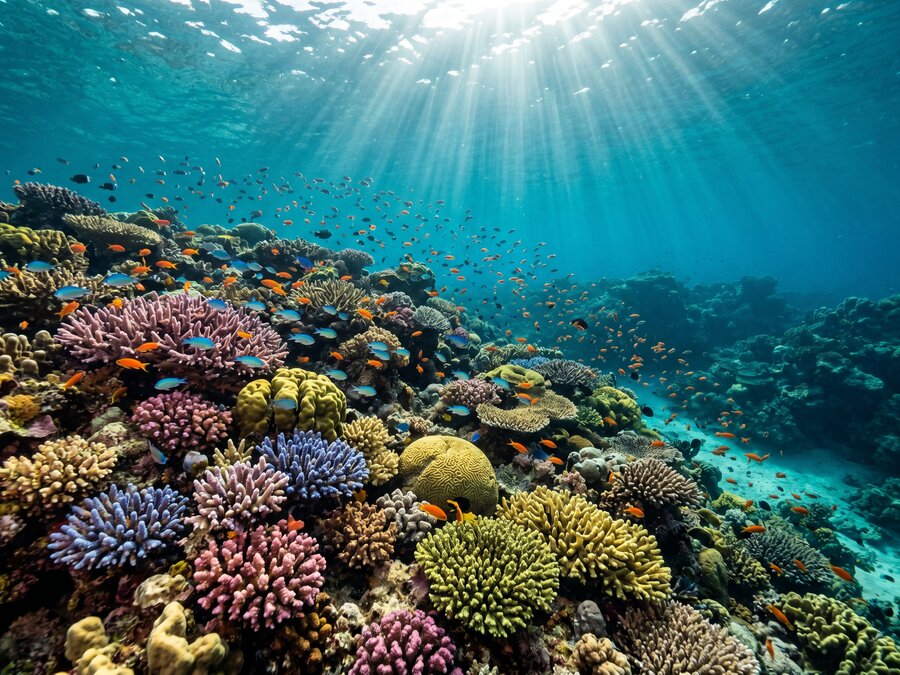
Coral reef systems make up less than 1% of the ocean floor yet support approximately 25% of all marine species. They protect coastlines from storm surge, sustain fisheries that feed hundreds of millions of people, and generate billions in tourism revenue annually.
Half of the world's coral reefs have been lost in the past 30 years — bleached by rising sea temperatures, destroyed by runoff, dynamite fishing, and coastal development. The rate of decline is accelerating.
GEP's reef-forestation programmes apply the same systematic, science-led methodology we use on land to marine ecosystem recovery. We assess baseline reef conditions, design species-specific coral restoration frameworks, and implement phased recovery programmes that rebuild structural complexity, biodiversity, and resilience over time.
Our Approach
Systematic Marine Ecosystem Recovery
Phase 01
Baseline Assessment
Comprehensive survey of existing reef structure, species composition, water chemistry, and degradation drivers — informing a site-specific recovery design.
Phase 02
Coral Propagation
Native coral species are propagated in controlled nursery conditions, selected for thermal tolerance and structural role, then transplanted into prepared reef substrate.
Phase 03
Long-Term Monitoring
Continuous monitoring via underwater sensors, satellite imaging, and diver surveys — feeding into our digital twin platform to track recovery trajectories and adapt management.